Agriculture in the green province of Gilan is not only a job, but it is rooted in the culture, history and identity of the people of this land. From vast rice paddies to tea and olive gardens, the fertile soil of Gilan has always been a platform for the production of strategic products. But the preparation of this heavy and clayey soil requires a powerful tool. Meanwhile, the plow plays a vital role as the beating heart of tillage operations. In this article from the Farmers' Mechanization site, we will carefully review the evolution, production and application of plow types in Gilan agriculture and analyze the differences between traditional and modern plowing.
The importance of tillage in the humid climate of Gilan
Gilan province has a unique soil texture due to abundant rainfall and high humidity. The soils of this area are often clayey and heavy and have high adhesion. This issue makes the selection and production of a suitable plow for this region to be doubly important. Primary tillage operations, mainly by plowing, should improve soil aeration, bury weeds, and prepare the seed bed for rice or other crops. If the plow used does not have the required quality or is not designed for the soil of Gilan, it not only causes soil erosion, but also greatly reduces the productivity of crop production. This is where the role of specialist manufacturers such as Agriculturist Machinery is emphasized, who produce efficient tools with a detailed knowledge of the region's climate.
The history of plows in Gilan: from Azal to metal tools
Before tractors and heavy machinery entered the fields of Gilan, farmers used to plow the land relying on livestock and wooden tools. Knowing this history helps us to better understand the value of today's technologies.
Azal: the native plow of Gilan
In the not so distant past, a tool called "Azal" (or Ezel) was the main plowing tool in Gilan. Azal was a type of wooden plow that had a very simple structure. This device consisted of a strong wooden trunk (usually from forest trees such as azad or oak), a sharp metal blade and a handle for guidance. This tool was pulled by the power of powerful bulls, which were called "varza" in the local dialect. Azal, unlike today's ploughs, did not turn the soil, but only created a gap in the ground so that the roots of the plants could penetrate the soil.
Limitations of traditional plowing
The use of azale and animal power, although compatible with the environment, had many limitations. The work speed was very slow and it took days or weeks to prepare a hectare of paddy field. In addition, the depth of plowing with this traditional tool was low and it was not possible to completely turn over the soil and bury plant remains. With the increase in population and the need for more production, the agriculture of Gilan required a fundamental transformation in the field of agricultural tools, especially plows.
The arrival of mechanization and modern plows
With the introduction of tractors and tillers in the agricultural field of Iran and Gilan, the shape and function of plows changed. Production of all-metal plows with precise engineering replaced wooden tools. This change allowed farmers to plow more areas in less time.
Types of plows used in modern agriculture in Gilan
Today there is a great variety in the production of tillage tools. Farmers Mechanization by examining the needs of Gilani farmers, proposes and produces different types of these tools, the most important of which are:
1. Moldboard Plow
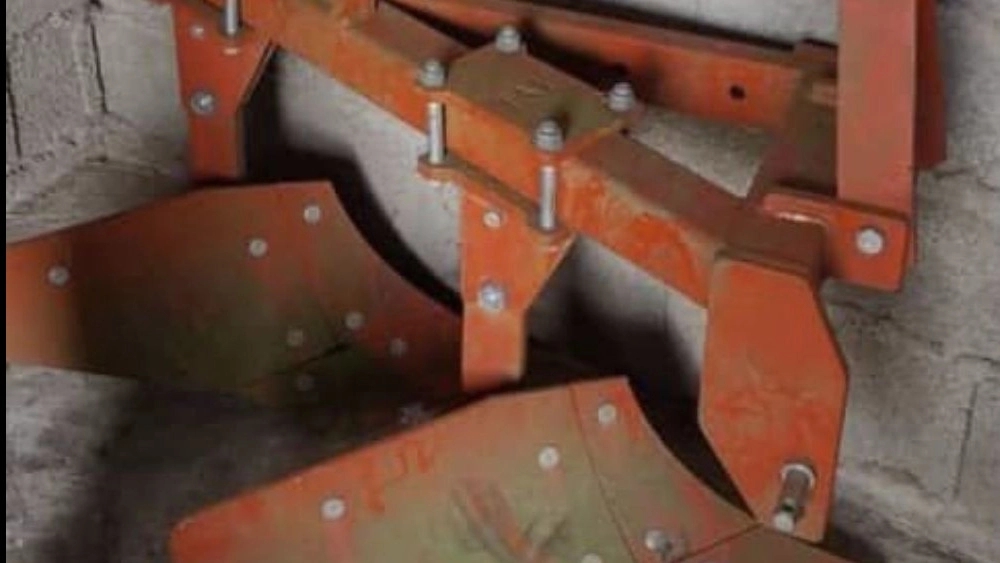
This type of plow is the most common type in the world and Iran. This device has a curved plate that cuts, lifts and turns the soil completely. This action causes the weeds and plant residues of the previous crop to go under the soil and become organic fertilizer. In the paddy soils of Gilan, it is very common to use a special type of reversible plow designed for sticky soils. The design of the socket and the cover plate should be such that the flower does not stick to it.
2. Disc Plow
In fields with tree roots, rocks or very dry and hard soils, the reversible plow may be damaged. In this situation, a plate plow is used. Instead of a fixed blade, this device uses rotating concave plates that penetrate the soil with their own weight and cut it. Although the use of this type is less in flooded paddy fields, it is used in the gardens and rainfed lands of Gilan.
3. Chisel Plow
For protective tillage and to prevent soil erosion, it is recommended to use a chisel plow or goose claw. This tool crushes and softens the soil without turning it over. This will preserve moisture in the lower layers of the soil. In the second fall crops in Gilan (such as rapeseed or vegetables), using a chisel can be a good option.
The process of plow production in the machinery of farmers
Production of a high-quality plough requires engineering knowledge, high-quality raw materials and advanced equipment. In Farmers' Mechanization collection, the production process is carried out with special care and obsession so that the final product has the ability to withstand the heavy pressures of the Gilan soils.
Selection of alloy and raw materials
The most important part of a plough is its chassis and blades. Blades must be resistant to wear and impact. The use of hardened and anti-wear alloy steels is a standard in agricultural machinery production. The chassis of the machine should also be made of heavy industrial profiles so that it does not bend or break when it hits hard obstacles on the ground.
Engineering design and penetration angle
The blade penetration angle in the soil determines the amount of pressure applied to the tractor and fuel consumption. If the angle of the plow is not designed correctly, the tractor has to spend a lot of force to pull it, which leads to the so-called "buckling" and increased wear and tear. With accurate calculations, the engineers of mechanization of agriculturalists adjust the angle of attack and the cutting angle in such a way that the plow penetrates the soil with the least force and creates a clean cut.
Welding and assembly
Connections in agricultural tools are under severe dynamic stresses. The use of advanced welding methods (such as CO2 welding) and quality tests after assembly guarantee the long life of agricultural machinery products. A good plough should work for years without needing major repairs under the most difficult conditions.
The role of plow in increasing the productivity of paddy fields
The paddy fields of Gilan require a special type of soil management. The operation of "ruining mud" or paddling, which is the final stage of preparing the land for planting, requires tools that preserve the hard bottom layer (Hardpan) but make the surface layer completely soft and muddy.
Using modern plows in the initial plowing phase (autumn or winter plowing) improves the soil structure. Deep plowing in winter causes overwintering pests (such as rice stem borer) to be exposed to the cold and killed. Also, the turning of the soil makes the rainwater penetrate and store better in the ground. Farmer Mechanization offers adjustable plows that allow the farmer to control the depth of plowing according to the needs of his field.
The benefits of using agricultural machinery products
Why should Gilani farmers choose Agriculturist Machinery to buy their tools? The answer lies in quality, localization and after-sales service.
- Indigenization for the soil of Gilan: Many tools imported or produced in dry areas of Iran do not perform well in sticky and humid soils of Gilan. Agriculturist Mechanization has optimized its products specifically for this climate. The distance between the plows and the height of the chassis in this company's plows is such that it prevents mud and plants from getting stuck (suffocating the plow). Durability and strength: The use of the best steels and industrial paints resistant to moisture and rust has made these tools have a long life in the harsh climate of Gilan. Product variety: from Small plows for tillers and garden tractors to large plows for heavy agricultural tractors are all in the company's product portfolio. Warranty and service: Easy access to spare parts such as sock, heel and return plate, solves the worries of farmers. Agriculturist Machinery considers itself committed to supporting hardworking farmers during the working season.
Plow maintenance and service
Even the best plows need maintenance. To increase the life of the machine, farmers should follow the following points:
- Daily inspection: Before starting work, all bolts and nuts should be tightened.
- Greasing: Bearings and moving points should be regularly greased to prevent wear.
- Timely replacement of consumable parts: Sockets and blades slow down over time. Working with a slow blade increases tractor fuel consumption and pressure on the hydraulic system. Standard spare parts can be obtained from Agricultural Machinery.
- Washing and storage: After the end of the plowing season, the plough should be thoroughly washed, dried and the surface of the blades coated with oil or grease to prevent rusting in storage.
The future of mechanization in Gilan
With the shrinking of agricultural lands and the lack of young labor in the villages, the need for modern and efficient agricultural tools is felt more than ever. The future of Gilan agriculture depends on the use of technologies that reduce production costs and increase efficiency. The use of compound plows (which perform several tillage operations at the same time) and double-sided plows (which eliminate the need for additional rounding of the tractor) are among the future trends. Agriculturist Mechanization is trying to market new and innovative products in line with the daily needs of farmers by constantly monitoring the world's latest technologies.
The economic impact of using the right plow
Choosing an inappropriate plough can cause many hidden losses to the farmer. Hardening of the lower layers of the soil, non-uniform germination of seeds, and increasing tractor fuel costs are only part of these losses. On the other hand, a one-time investment to buy a high-quality plow from a reputable brand such as Mashinazi Zaremekaran is considered a long-term investment. Correct plowing increases soil ventilation, better root growth and ultimately increases crop tonnage per hectare. This means more profit for the farmer.
Summary
Gilan agriculture has come a long way from "Azal" and "Varza" to modern tractors and advanced plows. In this direction, the goal has always been one thing: to produce a halal food from the heart of the soil. Nowadays, due to the economic and climatic challenges, the use of standard and engineered agricultural tools is an inevitable necessity.
Farmers Machinery is proudly standing by Gilani farmers to contribute to the development of this land by producing the best types of plows and other agricultural tools. If you are looking to improve the quality of your farming and want to benefit from experience and expertise along with modern technology, the products of farmers' machinery are the best choice for your farms. Let's appreciate the fertile soil of Gilan by choosing the right tools.
For advice on choosing the right type of plow for your tractor and the type of soil, you can contact our experts in Agricultural Machinery today. Our goal is the prosperity of agriculture and the comfort of farmers.